Choosing a baby monitor feels like one of the highest-stakes decisions you’ll make as a new parent. You’re looking for peace of mind, clear video, reliable connectivity, and features that actually matter—not just marketing gimmicks.
After researching dozens of models, reading hundreds of parent reviews, and comparing specs across budget, mid-range, and premium options, I’ve narrowed it down to the monitors that actually deliver.
This guide breaks down the best baby monitors of 2026 across different price points, so you can find the right fit for your family without overspending or compromising on safety.
What to Look for in a Baby Monitor (2026)
Before we dive into specific models, here’s what actually matters:
Video Quality: 1080p is now standard. Anything less feels dated, especially at night when you need clarity most.
Night Vision: Infrared night vision should be clear enough to see your baby’s chest rise and fall. Grainy, pixelated feeds defeat the purpose.
Connectivity: WiFi monitors offer remote access via smartphone, but they depend on your internet connection. Dedicated monitors use their own frequency and work during outages.
Two-Way Audio: Essential for soothing your baby without entering the room. Look for clear speakers without static or delay.
Security: If you’re going WiFi, encryption matters. Cheap cameras with weak security have been hacked. Stick with reputable brands that prioritize data protection.
App Experience: If the monitor requires an app, it should be intuitive. Buggy apps with constant crashes aren’t worth any amount of money saved.
Battery Life (for portable monitors): If you’re carrying a parent unit around the house, 10+ hours of battery life is the baseline.
Our Top Picks: Best Baby Monitors of 2026
Best Overall: Nanit Pro Complete Monitoring System
Price: ~$399
Type: WiFi-enabled, wall-mounted
Video Quality: 1080p HD
Best For: Parents who want comprehensive sleep tracking and premium features
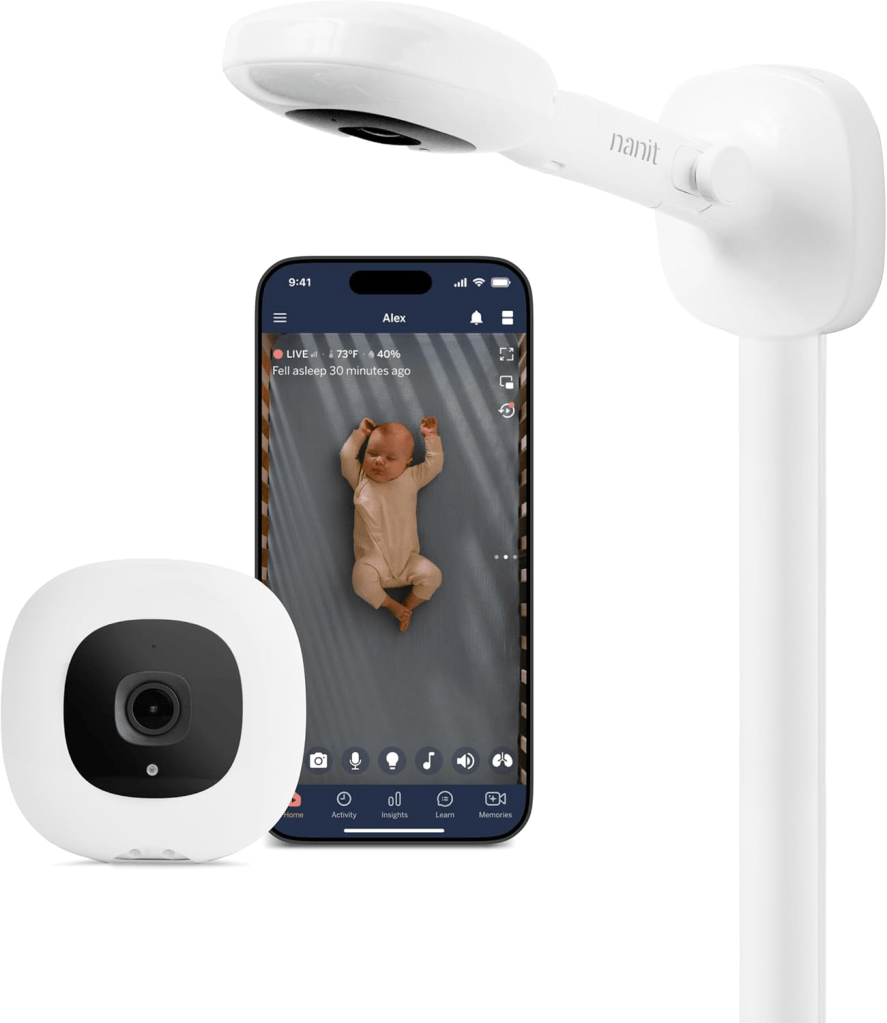
The Nanit Pro isn’t just a baby monitor—it’s a sleep analytics system. The overhead camera mounts on the wall above the crib, giving you a bird’s-eye view without any blind spots.
What Makes It Stand Out:
The real value is in the app. Nanit tracks sleep patterns, provides insights on wake windows, and even offers personalized sleep guidance. If you’re the kind of parent who wants data-driven help with sleep training, this is unmatched.
Video quality is crystal clear, even in complete darkness. The night vision uses invisible infrared light, so it won’t disturb your baby. Two-way audio is clear with minimal delay, and the temperature and humidity sensors help you maintain ideal nursery conditions.
Drawbacks:
It’s expensive. The camera itself is $299, but the “Complete” system with floor stand and multi-stand is $399. And the most valuable features—sleep tracking, insights, breathing monitoring—require a $20/month or $200/year “Insights” subscription after the free trial.
If your WiFi goes down, the monitor won’t work. You’re dependent on connectivity.
Bottom Line: If you can afford it and value sleep data, the Nanit Pro is the best long-term investment. The insights can genuinely help you improve your baby’s sleep, which is priceless to exhausted parents.
Check out the Nanit Pro Complete Monitoring System today.
Best for Safety Features: Owlet Dream Duo
Price: ~$349
Type: WiFi-enabled with optional Smart Sock
Video Quality: 1080p HD
Best For: Parents who want breathing and heart rate monitoring
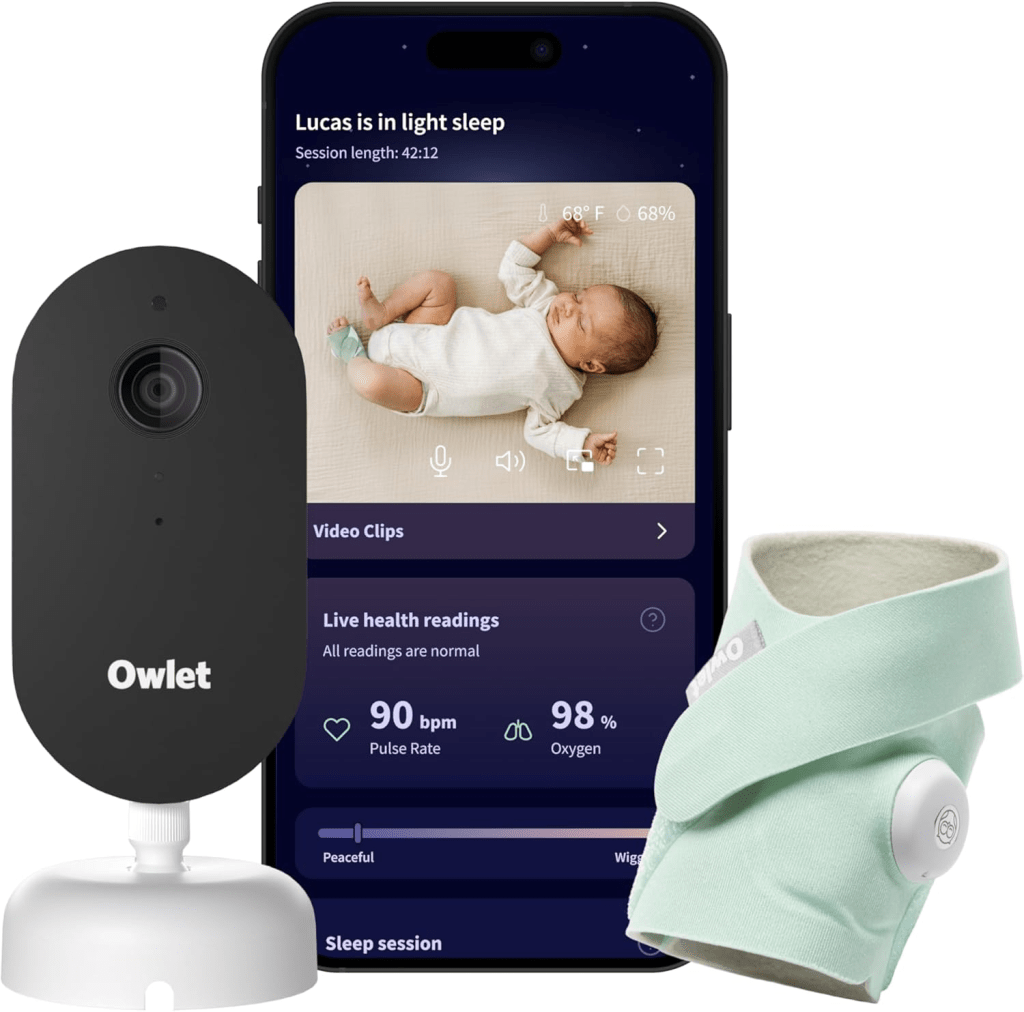
The Owlet Dream Duo combines a high-quality HD camera with the optional Smart Sock—a wearable monitor that tracks your baby’s heart rate, oxygen levels, and sleep patterns.
What Makes It Stand Out:
The Smart Sock is what sets Owlet apart. It wraps around your baby’s foot and monitors vitals in real time. If metrics fall outside preset zones, you get an alert on your phone and a base station alarm sounds.
For parents with premature babies, multiples, or anyone with heightened anxiety about SIDS, the Smart Sock offers reassurance no camera alone can provide.
The camera itself is excellent: sharp 1080p video, reliable night vision, two-way audio, and room sensors for temperature and humidity. The app is clean, intuitive, and responsive.
Drawbacks:
The Smart Sock is sold separately ($299) or bundled with the camera in the Dream Duo ($399-$449 depending on sales). You’ll need to buy different sock sizes as your baby grows (newborn, 0-18 months).
Some parents find the alerts overly sensitive, especially in the first few weeks when babies’ heart rates and oxygen levels naturally fluctuate.
Bottom Line: If you want medical-grade peace of mind and are willing to pay for it, the Owlet Dream Duo delivers. The Smart Sock isn’t for everyone, but for anxious parents, it’s worth every penny.
Buy the Owlet Dream Duo system today.
Best Budget Option: Infant Optics DXR-8 PRO
Price: ~$199
Type: Dedicated frequency (non-WiFi)
Video Quality: 720p HD
Best For: Parents who want reliability without monthly fees or WiFi dependence
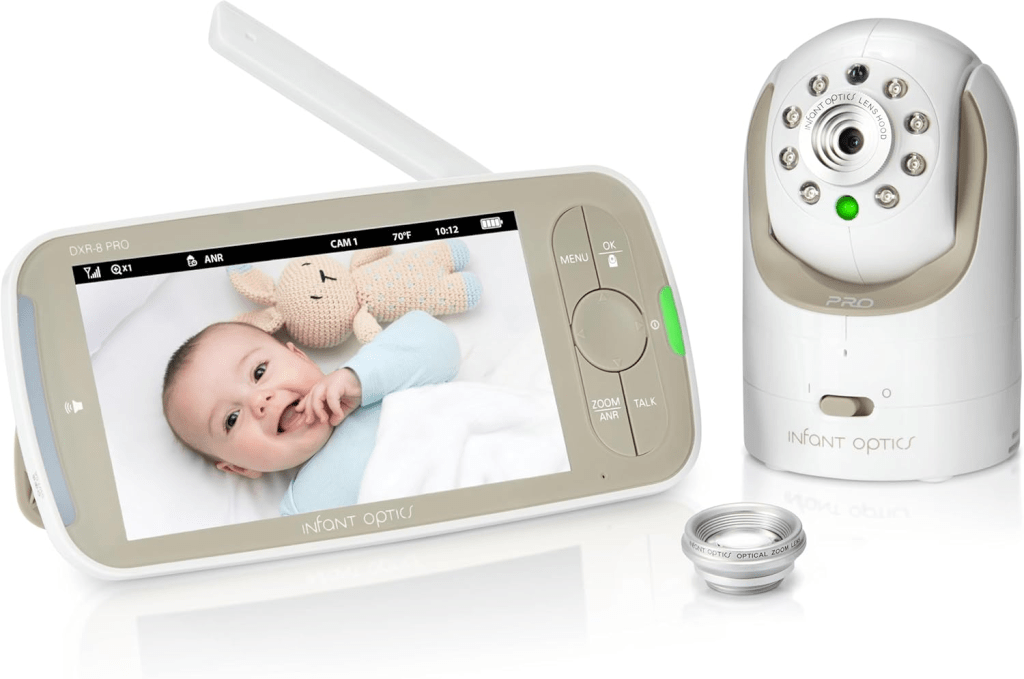
The Infant Optics DXR-8 PRO is the workhorse of baby monitors. It’s not flashy. It doesn’t have an app. But it works—every single time.
What Makes It Stand Out:
This is a dedicated monitor, meaning it uses its own wireless frequency instead of your home WiFi. That means:
- No dependency on internet connection
- No risk of hacking
- No lag or buffering
- Works during power outages (as long as the battery is charged)
The interchangeable lens system is unique: you can swap between normal, zoom, and wide-angle lenses depending on your nursery setup. The 720p video is clear enough to see your baby’s breathing, and the night vision is solid.
Battery life on the parent unit is excellent—12-18 hours depending on usage. The range is strong (up to 800 feet in open space, realistically 200-300 feet in a typical home).
Drawbacks:
No app. No remote viewing. If you’re away from home, you can’t check in.
720p video quality feels slightly dated compared to 1080p competitors, but it’s perfectly functional.
The screen is small (5 inches), which is fine for bedside use but not ideal if you want a large display.
Bottom Line: If you want a no-frills, reliable monitor that just works without subscriptions, apps, or WiFi headaches, the DXR-8 PRO is the best value. It’s especially great for grandparents or caregivers who aren’t tech-savvy.
The Infant Optics DXR-8 PRO is a great budget pick with no frills.
Comparison Table: At a Glance
| Feature | Nanit Pro | Owlet Dream Duo | Infant Optics DXR-8 PRO |
|---|---|---|---|
| Price | $399 | $349-$449 | $199 |
| Video Quality | 1080p | 1080p | 720p |
| Connectivity | WiFi | WiFi | Dedicated frequency |
| Sleep Tracking | Yes (requires subscription) | Yes (with Smart Sock) | No |
| Remote Viewing | Yes (app-based) | Yes (app-based) | No |
| Subscription Required | Optional ($20/mo for insights) | No | No |
| Best For | Data-driven parents | Safety-focused parents | Budget-conscious, WiFi-free |
Other Monitors We Considered (But Didn’t Recommend)
Eufy SpaceView Pro: Good video quality and battery life, but app reliability issues reported by multiple parents in 2026.
Motorola Halo+: Solid features, but laggy app and inconsistent connectivity made it frustrating to use.
Arlo Baby: Discontinued in late 2025. If you see it on sale, skip it—support has ended.
HelloBaby Monitors: Cheap ($80-120) but poor night vision and spotty range. You get what you pay for.
Frequently Asked Questions
Do I need a baby monitor if I have a small house or apartment?
You’d be surprised. Even in a 1-bedroom apartment, a monitor lets you see your baby without opening the door (which might wake them). It also gives you freedom to step outside, take a shower, or work in another room without constant anxiety.
Are WiFi monitors safe from hackers?
Reputable brands like Nanit and Owlet use bank-level encryption. To stay safe:
- Use strong, unique passwords
- Enable two-factor authentication
- Keep firmware updated
- Avoid off-brand cameras with weak security
How long will I use a baby monitor?
Most parents use them through age 2-3, some longer. The average is 18-24 months. Given that timeline, investing in a quality monitor makes sense—you’ll use it daily for years.
Can I use my phone or an old tablet as a baby monitor?
Yes, apps like Cloud Baby Monitor or Baby Monitor 3G turn devices into monitors. But dedicated monitors offer better night vision, longer battery life, and won’t tie up your phone.
What about audio-only monitors?
They’re cheaper ($30-60), but video adds so much peace of mind. Seeing your baby’s chest rise and fall, confirming they’re not tangled in blankets, or checking their position without entering the room is invaluable.
Final Recommendation: Which Monitor Should You Buy?
If money isn’t a concern and you want the best: Nanit Pro. The sleep insights alone can transform your first year of parenthood.
If you’re anxious about safety and want vitals monitoring: Owlet Dream Duo. The Smart Sock provides reassurance no camera can match.
If you want reliability without the tech overhead: Infant Optics DXR-8 PRO. It’s the “just works” option that won’t let you down.
All three of these monitors are excellent. The right choice depends on your priorities: data and insights (Nanit), safety monitoring (Owlet), or simple reliability (Infant Optics).
Whichever you choose, you’re making a smart investment in your peace of mind—and that’s worth far more than the price tag.
Need help with the rest of your baby registry? [Join our newsletter] for weekly recommendations, buying guides, and tips from parents who’ve done the research so you don’t have to.
Disclosure: This post contains affiliate links. If you purchase through our links, we may earn a small commission at no extra cost to you. We only recommend products we genuinely believe in.
 Provider